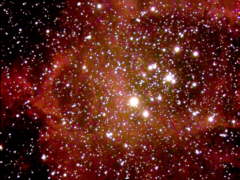
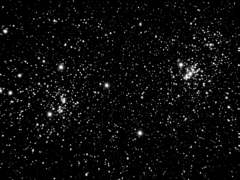
The First Good Night of the New Year
|
My Friday nights have been somewhat empty since the South Florida Science
Museum shut its doors, so I was pleased when I received both phone calls
and e-mails from fellow stargazers asking me to attend an impromptu viewing
session in the Everglades. The turnout was quite good for and unscheduled
event, with seven cars, seven scopes and seven amateur astronomers in
attendance. The many dozens of astrophotos that I have been showing around
has had its effect on the other guys, because this time there were three of
us busily devoting the entire evening to imaging! The skies were completely clear and the upper atmosphere was very stable. At ground level, the humidity was quite low with no dew or fog and there was no wind at all. Except for right at sunset, there were no mosquitoes either. In short, a perfect night for astronomy. My primary target for the evening was the soon to be brilliant comet T7-Linear. It was still four months from its close encounter with Earth and as of yet only at the 8th magnitude, but I wanted to capture the first of what hopefully will be a sequence of images of this object as it passes through our inner solar system. 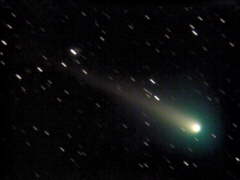
 My several attempts to download a cometary database into the Skychart
program on my laptop earlier in the day had proven to be unsuccessful, so
I was forced to revert to the old fashioned method of actually finding
the comet in the sky. In what is normally considered to be an unnatural
act for me, I actually brought along a note listing the expected RA and
Dec that I had extracted from the NASA web site.
My several attempts to download a cometary database into the Skychart
program on my laptop earlier in the day had proven to be unsuccessful, so
I was forced to revert to the old fashioned method of actually finding
the comet in the sky. In what is normally considered to be an unnatural
act for me, I actually brought along a note listing the expected RA and
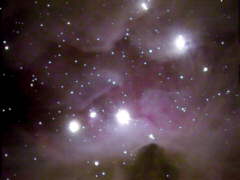
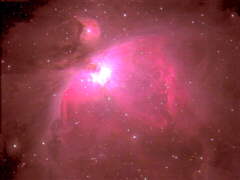
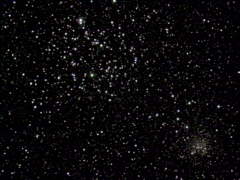
Dec that I had extracted from the NASA web site.Since the scope was on the wedge and pointing North, it was a relatively simple operation to slew the scope till the coordinates matched the ones I had for the comet. When I looked through the eyepiece, there it was! It had a dense and well defined head with a long flowing tail. Everyone else came over to view it, but then (of course) they each wanted to view the comet through their own scopes. I first passed out the comet's coordinates to my colleagues with electronically controlled scopes. After they had each targeted the object, I flashed my bright green laser into the sky so those with DOBs could follow the beam to its prize. The entire group was more than pleased with the sight, and if the evening had ended right then and there, I think everyone would have gone home happy. 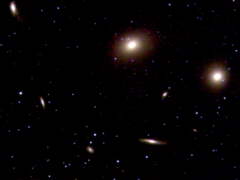 As the evening wore on, conditions only continued to improve, and they
were pretty darned good to start with. The viewing of the comet had set
the mood for the entire evening, and it seemed that the weather was in
at least as good a mood as the rest of us. I removed the eyepieces from
my scope and replaced them with a load of photographic equipment. After
capturing a twenty minute sequence of the comet (shown above), I went on
to image 11 additional bright objects, twenty minutes apiece. The final
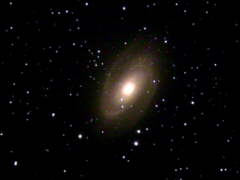
shot of the night was the nice group of galaxies in the Virgo Cluster that
surround M86. I adjusted the brightness and contrast during processing
to mimic the actual view presented through the eyepiece of a 10" telescope
at a good dark site.
As the evening wore on, conditions only continued to improve, and they
were pretty darned good to start with. The viewing of the comet had set
the mood for the entire evening, and it seemed that the weather was in
at least as good a mood as the rest of us. I removed the eyepieces from
my scope and replaced them with a load of photographic equipment. After
capturing a twenty minute sequence of the comet (shown above), I went on
to image 11 additional bright objects, twenty minutes apiece. The final
shot of the night was the nice group of galaxies in the Virgo Cluster that
surround M86. I adjusted the brightness and contrast during processing
to mimic the actual view presented through the eyepiece of a 10" telescope
at a good dark site.The last of us packed up our equipment shortly after moonrise at 3:15 AM, and by 4 AM, the place was empty once again (except for the alligators). Fred Lehman, January 16, 2004.
| ||||||||||||