A Three Hour Break in the Haze
|
After three straight weeks of continuous heavy rains, the skies
miraculously cleared up Wednesday morning, and the strong winds subsided
by late afternoon. There had been so much rain and so many clouds for so
long that I was quite unable to control myself. I was completely famished
(telescopically speaking), so I took a chance and went out into the
Everglades with my scope.
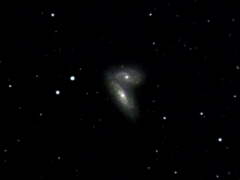
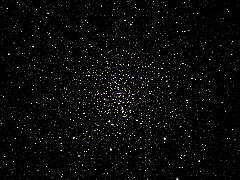
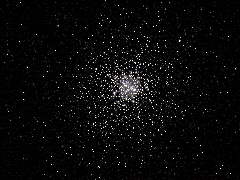
The very late sunsets provided by the Summer Solstice enabled me to arrive at my destination on time, in spite of my normal tardiness. I set up my equipment relatively quickly, after which I simply sat down and rested while the evening twilight slowly faded into darkness. The conditions that night were almost surreal. There was no wind at all, not even as much as 1 mph. The temperature was quite pleasant, and there was no dew. The air was humid but clear and stable. There were no clouds, but there was a little bit of high level haze. In spite of the complete absence of wind, there were no mosquitoes at all -- none. It's hard to imagine, but there I was, fifty miles out into the Everglades at the peak of Summer, wearing a short sleeved shirt and short pants and no mosquito repellent! For my first celestial target, I selected the 12th magnitude Siamese Twins, NGC4567 & NGC4568. I had time to spare, so I spent that time carefully adjusting the scope to the finest focus I have ever achieved. I imaged the twins for a full hour, and the resulting photo is far and away my best one yet. After collecting a good sequence of dark frames, I moved on to the closest of the globular clusters, M4. Unfortunately, the unexpected clearness of the early evening was rapidly giving way to a large sheet of nondescript haze. After only 20 minutes of exposing, M4 had faded into total obscurity. After closing off that imaging sequence, I slewed over to M13, which by now was almost directly overhead. Twenty minutes was all it took for the leading edge of the haze to advance to the zenith, but by the time it reached M13, I had already captured an adequate set of images. I sat there for another half an hour waiting for the haze to show a sign that it might thin out, but alas, the soup only thickened and eventually it conquered the entire sky. Reluctantly, at only 1:30 AM, I put everything away and headed for home. As the night progressed, the haze slowly turned into clouds, and by morning it was raining once again. Looking back upon it, although it had been a relatively short evening, as it turned out, it had been a really good evening. Fred Lehman, June 25, 2003.
| ||||||